Saturday, 12 August 2023

Ellington à Goutelas


One of the highlights of the recent Ellington meeting 2023, Paris was the screening of Laurent Lukic's documentary Une Poule sûr un Piano about the restoration of Château de Goutelas.

Now, the conference hosts La Maison du Duke have made this important and moving film available via YouTube.

Voilà


DOCUMENTARY

« Ellington in Goutelas »

Laurent Lukic

Saturday, April 29 – 10:55 am - Médiathèque Musicale de Paris

In 1966, while in transit in Geneva at the end of a European tour in Madrid, Duke Ellington surprised everyone by deciding to make a diversion to the castle of Goutelas in Forez, located 300km from the Swiss border! A building under restoraVon that he had been told about a few months earlier, during his concert in Lyon. Duke will stay three days in Forez - the three best days of his life, according to Mercer, his son. Duke Ellington was to make a double contribuVon to the fame of Goutelas, a humanist residence from the 16th century, which was then being rebuilt by volunteers from all walks of life: firstly by his friendly and unprecedented presence, which caused the press to move in, including Paris Match, and then by composing, five years later, the Goutelas' Suite. Une Poule sur un piano offers to discover in music and images this work, of which the original recording numbered only 1000. This documentary, which pays tribute to Duke Ellington, is also a ciVzen's film which tells the story of how workers, intellectuals, farmers and arVsts, united in a common goal, have given new life to a ruined castle, which is now one of the twenty Centres Culturels de Rencontre in France.

Laurent Lukic

Director since 2005, Laurent Lukic has a particular attachment to human relations through his films. Documentary is for him a way to be in agreement with his social and human convictions. Une Poule sur un Piano, his first feature film, highlights men and women from all walks of life, brought together to rebuild a symbol of humanism: the Château de Goutelas. Duke Ellington was deeply moved by their approach and also devoted his time to it, producing the Goutelas' Suite in tribute to them. Une Poule sur un Piano won two awards at the Festival Caméra des Champs de Ville/Yron in Lorraine. Since 2010, Laurent has been travelling the world: South Africa, Morocco, Burkina Faso to make films. He collaborates with the Association Route de la Soie to document traditional fashion in countries such as Azerbaijan, Uzbekistan, Kazakhstan, Kyrgyzstan and Mongolia. Through fashion, it is the cultural and spiritual connection between East and West that is highlighted. In February 2021, he directed, for France 3, the documentary J'Irai Créer Chez Vous in which artists are inspired and create with the inhabitants of the Caillols district in Marseille. All these audiovisual adventures have been supported since 2014 by the production company he co-founded, Colombe Production.

(Source)


Thursday, 10 August 2023

Discography: Ellington In Order Volume 3 (1930-32)


Mills Ten Blackberries 
New York City, NY      

12 June 1930

Columbia recording session

Arthur Whetsel, Cootie Williams, Freddie Jenkins(t); Joe Nanton(tb); Barney Bigard(cl,ts); Johnny Hodges(cl,ss,as); Harry Carney(cl,as,bar); Duke Ellington(p); Fred Guy(bj); Wellman Braud(sb); Sonny Greer(d)

 Sweet Mama

Hot And Bothered    

Double Check Stomp          

Black And Tan Fantasy


Duke Ellington and his Orchestra

Los Angeles, CA         

20 August 1930

RCA-Victor recording session

Arthur Whetsel, Freddie Jenkins(t); Cootie Williams(t,v); Joe Nanton, Juan Tizol(tb); Barney Bigard(cl,ts); Johnny Hodges(cl,ss,as); Harry Carney(cl,as,bar); Duke Ellington(p); Fred Guy(bj); Wellman Braud(sb); Sonny Greer(d,ch); Emmanuel Hall Quartet, Jimmy Miller(v)

Ring Dem BellsvCW            

Ring Dem Bells  vCW           

Old Man Blues         

Old Man Blues         

Old Man Blues         

Three Little Words vEHQ 


Duke Ellington and his Orchestra            

Los Angeles, CA         

26 August 1930

RCA-Victor recording session

Arthur Whetsel, Cootie Williams, Freddie Jenkins(t); Joe Nanton, Juan Tizol(tb); Barney Bigard(cl,ts); Johnny Hodges(cl,ss,as); Harry Carney(cl,as,bar); Duke Ellington(p); Fred Guy(bj); Wellman Braud(sb); Sonny Greer(d,ch); The Rhythm Boys(v)

Ring Dem Bells vCW           

Old Man Blues         

Old Man Blues 

Three Little Words vTRB     


Duke Ellington and his Orchestra            

New York City, NY      

2 October 1930

RCA-Victor recording session

Arthur Whetsel, Cootie Williams(t) Freddie Jenkins(t); Joe Nanton, Juan Tizol(tb); Barney Bigard(cl,ts); Johnny Hodges(cl,ss,as); Harry Carney(cl,as,bar); Duke Ellington(p); Fred Guy(bj); Wellman Braud(sb); Sonny Greer(d,ch); Dick Robertson(v)

Hittin' The Bottle vDR        

Hittin' The Bottle vDR        

That Lindy Hop vDR            

You're Lucky To Me vDR    

Memories Of You vDR         


The Harlem Footwarmers

New York City, NY      14 October 1930

Okeh recording session

Arthur Whetsel(t); Joe Nanton(tb); Barney Bigard(Cl); Duke Ellington(p); Fred Guy(bj); Wellman Braud(sb); Sonny Greer(d)

Big House Blues       

Rocky Mountain Blues 

Mood Indigo      


The Harlem Music Masters

New York City, NY      

30 October 1930

Okeh recording session

Arthur Whetsel, Freddie Jenkins(t); Cootie Williams(t,v); Joe Nanton, Juan Tizol(tb); Barney Bigard(cl,ts); Johnny Hodges(cl,ss,as); Harry Carney(cl,as,bar); Duke Ellington(p); Fred Guy(bj); Wellman Braud(sb); Sonny Greer(d,ch); Irving Mills(v)

Ring Dem Bells vCW            

Three Little Words vIM        


The Harlem Footwarmers             

Same session

Arthur Whetsel, Freddie Jenkins(t); Cootie Williams(t,v); Joe Nanton, Juan Tizol(tb); Barney Bigard(cl,ts); Johnny Hodges(cl,ss,as); Harry Carney(cl,as,bar); Duke Ellington(p); Fred Guy(bj); Wellman Braud(sb); Sonny Greer(d,ch)

Old Man Blues         

Sweet Chariot vCW  


Duke Ellington and his Cotton Club Orchestra

New York City, NY      

21 November 1930

RCA-Victor recording session

Arthur Whetsel, Cootie Williams, Freddie Jenkins(t); Joe Nanton, Juan Tizol(tb); Barney Bigard(cl,ts); Johnny Hodges(cl,ss,as); Harry Carney(cl,as,bar); Duke Ellington(p); Fred Guy(bj); Wellman Braud(sb); Sonny Greer(d,ch); Sonny Greer(v)

 Nine Little Miles vSB          

Nine Little Miles vSB          

I'm So In Love With You vSB          

I'm So In Love With You vSB          


Duke Ellington and his Cotton Club Orchestra

New York City, NY      

26 November 1930

RCA-Victor recording session

Arthur Whetsel, Cootie Williams, Freddie Jenkins(t); Joe Nanton, Juan Tizol(tb); Barney Bigard(cl,ts); Johnny Hodges(cl,ss,as); Harry Carney(cl,as,bar); Duke Ellington(p); Fred Guy(bj); Wellman Braud(sb); Sonny Greer(d,ch); Dick Robertson, Sonny Greer(v)

What Good Am I Without You?vDR         

Blue Again  vSGa      

When A Black Man's Blue vSG     


Duke Ellington and his Cotton Club Orchestra

New York City, NY      

10 December 1930

RCA-Victor recording session

Arthur Whetsel, Cootie Williams, Freddie Jenkins(t); Joe Nanton, Juan Tizol(tb); Barney Bigard(cl,ts); Johnny Hodges(cl,ss,as); Harry Carney(cl,as,bar); Duke Ellington(p); Fred Guy(bj); Wellman Braud(sb); Sonny Greer(d,ch); Dick Robertson, Bennie Payne(v)

Mood Indigo

What Good Am I Without You? vDR         

When A Black Man's Blue vSG     


The Whoopee Makers

New York City, NY      

8 January 1931

RCA-Victor recording session

Arthur Whetsel, Cootie Williams, Freddie Jenkins(t); Joe Nanton, Juan Tizol(tb); Barney Bigard(cl,ts); Johnny Hodges(cl,ss,as); Harry Carney(cl,as,bar); Duke Ellington(p); Fred Guy(bj); Wellman Braud(sb); Sonny Greer(d,ch); Sid Garry(v)

I Can't Realise You Love Me vSGa            

I'm So In Love With You vSGa       


The Whoopee Makers                    

Same session

Same personnel

Rockin' In Rhythm   


Duke Ellington and his Orchestra        

New York City, NY      

16 January 1931

RCA-Victor recording session

Arthur Whetsel, Cootie Williams, Freddie Jenkins(t); Joe Nanton, Juan Tizol(tb); Barney Bigard(cl,ts); Johnny Hodges(cl,ss,as); Harry Carney(cl,as,bar); Duke Ellington(p); Fred Guy(bj); Wellman Braud(sb); Sonny Greer(d,ch); Chick Bullock(v)

The River And Me vCBu      

Keep A Song In Your Soul vCBu    

Sam And Delilah vCB          

Rockin' In Rhythm   

Rockin' In Rhythm   


Duke Ellington and his Orchestra

Camden, NJ     

11 June 1931

RCA-Victor recording session

Arthur Whetsel, Cootie Williams, Freddie Jenkins(t); Joe Nanton, Juan Tizol(tb); Barney Bigard(cl,ts); Johnny Hodges(cl,ss,as); Harry Carney(cl,as,bar); Duke Ellington(p); Fred Guy(bj); Wellman Braud(sb); Sonny Greer(d,ch)

Creole Rhapsody Part 1       

Creole Rhapsody Part 2       

Creole Rhapsody Part 2       


Duke Ellington and his Cotton Club Orchestra  

Camden, NJ     

16 June 1931

RCA-Victor recording session

Arthur Whetsel, Cootie Williams, Freddie Jenkins(t); Joe Nanton, Juan Tizol(tb); Barney Bigard(cl,ts); Johnny Hodges(cl,ss,as); Harry Carney(cl,as,bar); Duke Ellington(p); Fred Guy(bj); Wellman Braud(sb); Sonny Greer(d,ch)

Limehouse Blues     

Echoes Of The Jungle


Duke Ellington and his Orchestra

Camden, NJ     

17 June 1931

RCA-Victor recording session

Arthur Whetsel, Cootie Williams, Freddie Jenkins(t); Joe Nanton, Juan Tizol(tb); Barney Bigard(cl,ts); Johnny Hodges(cl,ss,as); Harry Carney(cl,as,bar); Duke Ellington(p); Fred Guy(bj); Wellman Braud(sb); Sonny Greer(d,ch)

It's Glory        

The Mystery Song    

The Mystery Song


Trombone Red and his Blue Six

New York City, NY

18 June 1931

"following is possible" (according to Lord Jazz Discography): Charlie Gaines (tp) or Jabbo Smith (tp); Robert freeman (tb); Otto Hardwick (as); Duke Ellington (p); Fred Guy (bj); Sonny Greer (d); unknown (vcl)

Greasy Plate Stomp (vcl)

B-Flat Blues


All In Order


Ahead of the release of Volume 3 of Ellington In Order to streaming services tomorrow, an update from the producer of the series, Charles L. Granata who explains the process behind preparing the files for release.

Chuck says:

 ‘(T)hrough the years these tracks have been digitized numerous times, and each often bears a different ISRC number. This number is assigned to each unique track and in a perfect situation, should be the sole identifier for each unique track. Because of repetition and many other factors, there are incorrect tracks linked to ISRC numbers - and multiple versions of the same track with different ISRC identifiers. In addition to creating the chronological discography, adding in the vault master sound element and dealing with cleaning up the “metadata” (ISRC number, correct matrix number, etc.) for each recording that identifies each digital file I need to make sure that I’ve got the correct master for each song. …Sony owns multiple sessions for the same song recorded for different labels at the same time! It’s probably the most convoluted and confusing catalog I have ever worked with from the organizational perspective.


‘(A)lthough labels used to open their paper data archives to scholars and discographies (which is why so many discographies decades in the making are so accurate), the missing component is usually a genuine “vault report.”


What I have been able to verify is exactly how many masters we have for each song (original metal part, lacquer disc, test pressing, tape or digital master). In some cases we have multiple copies of any given take of a song; in others, the master is listed as being slated for recording but we have no master nor any proof that it was actually laid down. Each label had a different method of assigning matrix numbers and listing the data on recording reports, too. It makes it more complicated to sort out - that’s for sure.


My vault report lists approximately 4500 individual master elements for Duke Ellington. Each one has its own Sony Music vault barcode, which is our way of locating it in the vault and tracking it on its travels from vault to studio and back again. I am integrating all of the barcodes into my master report, which is another way of verifying exactly what does and does not exist.


I do love the “archeological” aspect of it, and there’s great satisfaction (as a record collector) to taking all this information from disparate sources and putting it all together for the first time.’


Most excitingly of all for aficionados of Ellington and Strayhorn’s work, Chuck promises…


 “Much, MUCH more to come! This is definitely a multi-year project…


I will happily share my master discographical document with the Ellington collectors once it’s complete… I promise to correct them and “get it all right,” and share whatever I learn with scholars and fans.’


The Ellington In Order project is the gift that just keeps giving…


Many thanks to Chuck for his time and insight.

Saturday, 5 August 2023

Some Enchanted Evening

Scrolling through the Internet on a rainy Friday afternoon yesterday, I chanced upon the following article written by Playthell Benjamin.

I can find no particular date for the engagement Mr Benjamin details here beyond his own reference to 'the early seventies', a period I am currently researching for Tone Parallel. The reference to Symphony of the New World is also extremely interesting. Some further digging required but, for now, here is the article in full. No infringement of copyright intended and the original source for the article (from the Routes website) is cited below.

Reveries of an Enchanted Evening with Maestro Ellington


April 29th will mark the 123rd anniversary of the birth of Edward Kennedy ‘Duke’ Ellington. Standing outside the elegant brick and stone building on St. Nicholas Avenue, in the Sugar Hill section of Harlem — which is referred to in the lyrics to “Take the A Train” — I listened to sonic gems from the late jazz master’s copious musical oeuvre through my earphones, sonic samples from a repertoire that includes over 2000 compositions. Now a national historical landmark, the unassuming and well-kept little building was the site of many of the Duke’s numerous compositions about his beloved Harlem.

Chillin’ in front of Duke’s crib, listening to “Take the A Train”, “Harlem Airshaft”, “Black, Brown and Beige Suite” and “Satin Doll”, I could feel his presence. And it resurrected memories of an enchanted evening I once spent with him in his downtown digs back in the early seventies, when the master was in the twilight of his wonderful life.

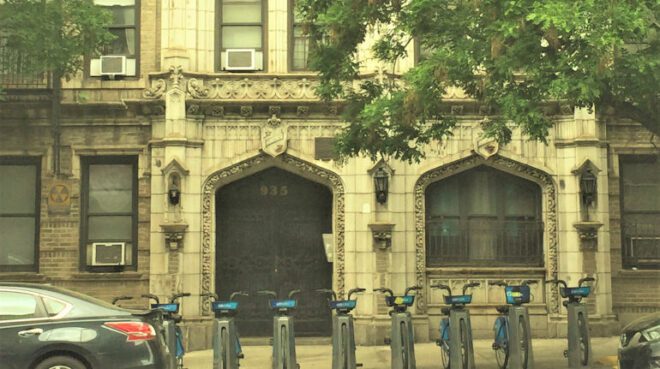
935 St. Nicholas Avenue — Outside Dukes Place
St. Nicholas Avenue — Outside Duke’s Place in Sugar Hill, Harlem

It was a soft, sparkling, lovely summer afternoon, and I couldn’t suppress the thought that I was about to experience a rare opportunity to witness history in the making. For just a few blocks from my crib on the upper west side, the best of the Afro-American and European orchestral traditions was being fused into a marvelous musical tapestry. The great Ellington Orchestra was participating in a collaboration with the “Symphony of the New World,” conducted by the renowned African-American cellist Kermit Moore — a founding member — for the express purpose of exploring the incandescent musical imagination of the peerless Edward Kennedy Ellington.

It was altogether fitting that the concert was held at Lincoln Center, the premiere venue of the Performing Arts, which was then the most conspicuous symbol of American cultural schizophrenia. The Jazz department, which was added a few years ago, is a prominent sign of recovery toward cultural wellness. To my mind at the time, this concert was the musical event of the season. I was convinced of this in spite of the rather astonishing fact that New York City was host to over fifty thousand musical performances that year! For this was a musical offering beyond category. The most consistently inventive musical craftsman in America, would preside over a posse of virtuoso instrumental pioneers, and their vast musical wisdom would be shared with some of the rising stars of the younger generation through the joyful experience of making music.

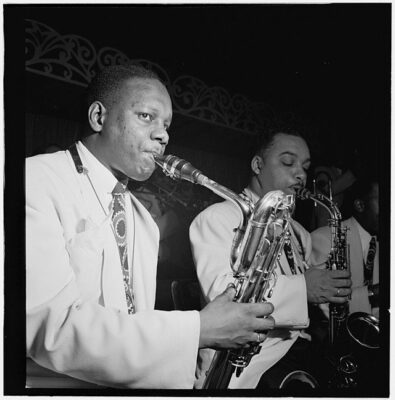
Portrait of Harry Carney and Russell Procope, Aquarium, New York, N.Y., ca. Nov. 1946)

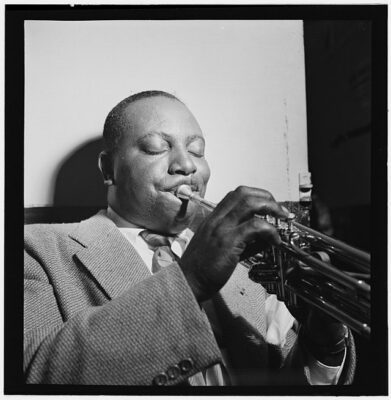
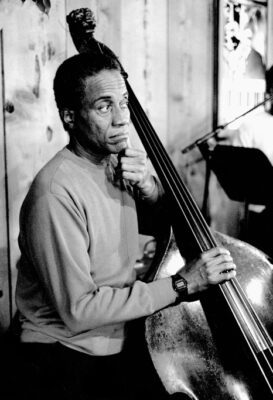
Seated side by side on the bandstand were vintage staples of the Ellington orchestra like Baritone saxophonist Harry Carney, Clarinetist/alto saxophonist Russell Procope, and trumpeter Cootie Williams, joined by brilliant young masters like bassist Richard Davis, cellist Kermit Moore, flautist Hubert Laws and violinist John Blair. And the Jazz master’s cookin’ solos were fired up by the lush sounds of the Symphony of the New World. Although these two musical aggregations were born of very different aesthetic impulses, they came together in perfect harmony on this divine day.

Portrait of Cootie Williams, New York, N.Y., between 1938 and 1948)

The Ellington Orchestra was organized to give expression to the Duke’s unique musical vision and prolific compositional gifts, which produced a fifty year flow of musical portraits and tone poems that captured the beauty and complexities of the cultural ambiance and lifestyles of black Americans, a virtual sonic kaleidoscope of Afro-Americana that captured the ethos of American civilization. And, I might add, contributed mightily to the creation of Jazz, a neo-African art form which provides a truer portrait of America than any of the paintings by the equally American school of “Abstract Expressionist” painters.

Richard Davis at Bach Dancing & Dynamite Society with John Carter, Andrew Cyrille and Bobby Bradford 2/28/87 © Brian McMillen http://www.brianmcmillenphotography.com
Richard Davis at Bach Dancing & Dynamite Society  2/28/87 © Brian McMillen

Symphony of the New World

On the other hand, the now defunct Symphony of the New World — which was named after the famous composition by distinguished Bohemian composer Antonin Dvorak, which utilized Afro-American melodies as it’s central theme — was the Afro-American musician’s response to the racism and cultural chauvinism that continues to besmirch the reputations of the nation’s leading symphony orchestras. Hence that orchestra served primarily as a vehicle for those Afro-American composers, conductors and instrumentalists who chose to express themselves in the genre of wholly composed music. When these two orchestras merged in concert, it was clearly an artistic event of the first order.

The chain of events which led to my receiving a highly coveted invitation to the after party at Duke’s place began when the Maestro was greeting friends, fans and well-wishers backstage after the gig. As Duke graciously chatted with guests, Master John Blair — a colorful bald head character who looks like a bronze Mr. Clean but is a master of the martial arts and the violin — eased up behind Duke and started playing a medley of his tunes. Pleasantly surprised, Duke turned around broadly smiling and said: “So you’re a jazz violinist too huh?” Then he invited John to come party at his place. For my part, it was a case of being in the right place at the right time. Since Master John Blair was my main man, he invited me to tag along.

It was a short trip to Fifty Ninth Street and Columbus Circle, where Duke kept and apartment overlooking the southern most entrance to Central Park. Approaching the lobby to the building I reflected on the fact that at the turn of the century, a community known as “Black Bohemia” was located just a few blocks away. It was the home of such gifted Afro-American artists as Ubie Blake, Nobel SisselWill Marion CookeJames Reece EuropeJ. Rosamond JohnsonJames Weldon JohnsonBert Williams and George Walker.

These men played a vital role in both the creation of the American popular song  — James Weldon Johnson was a founder of ASCAP — and the development of the American musical theater. Several of them influenced the musical development of Duke Ellington, especially conservatory trained composer and virtuoso violinist who was tutored by European masters Will Marion Cooke, with whom Duke studied music theory and called “Pops.”

As we entered Dukes apartment, we were greeted at the door by his sister Ruth, who proved to be a gracious and charming host throughout the evening. The first thing to seize my attention was a large white grand piano in the middle of the living room floor. Surrounded by a sea of white walls, drapes and carpet, the piano seemed to stand out as the central fact of this living space. The overall aesthetic effect was one of purity and singularity of purpose. It was sort of like entering a temple devoted to the making of music.

The scene was like a waiting group of religious devotees

I scanned the room, observing the anxious nervous energy displayed by various members of the group, as they anticipated the Duke’s presence. The scene had much in common with a group of religious devotees awaiting the presence of their guru. As we were introduced around, it became immediately clear that this assemblage comprised a unique collection of personalities. There were several aging members of the European nobility, sporting titles that suggested the grandeur of a now-forgotten world. There was a black expatriate symphonic conductor, forced to live in Sweden in order to practice his art. And a young black man exotically attired in a flowing black monk’s robe and a large straw hat, engaged in lively conversation with some erudite members of the Duke Ellington Society.

The gathering also included a smattering of the obligatory record executive types and a few solidly middle-class professionals. As I perused about the room, cocktail in hand savoring the excellent cuisine and listening to bits and pieces of conversations, I became aware of a sudden and dramatic change in the ambiance of the room. I looked around….and there he was, the musical genius who had left an indelible imprint on the music of America and greatly influenced the orchestral music of the world. Yes! There he was, Duke Ellington in the flesh, standing in his own living room. It was almost too much!

The Duke walked straight to the piano and sat down

After greeting us with his infectious charm and fabled smile, he walked straight to the piano and sat down. Strikingly and colorfully attired in a flowing red silk robe, complemented by a floor length white silk scarf, he seemed almost a different species of animal from the rest of us. It was easy to see how he got the name “Duke”, a name that suggests nobility. For he possessed the attributes that we have been conditioned to associate with a hereditary nobility. But Duke was a natural aristocrat, belonging to the aristocracy of talent and genius, which after all is the only one that really matters. And it soon became obvious that this critical distinction was also recognized by those ascribed aristocrats, who were born to the purple, yet sat around the room frozen in awe like relics from a European wax museum.

Everyone watched in amazement as the Duke secured his cigarette in an elegant holder fashioned from gold and ivory, then he began to lightly play through some of his tunes. As the evening progressed, I could clearly delineate various aspects of his character in the events that transpired. From the outset his total devotion to music was self-evident. And the requests arising from the guests testified to the universal appeal of his art. Some of these people had crossed an ocean to attend the concert earlier of the day. After a while, it was clear that several of the guests had seriously followed Duke’s work for thirty to forty years.

One could hear girlish laughter arising from the group as an elderly Countessa recalled first hearing a particular tune in Paris during the thirties, or was it Stockholm in the forties? In a business as fickle as music, it is difficult for an artist to retain a national audience for five or ten years. Yet here was a man who had retained an enthusiastic worldwide audience for fifty years! As Duke responded to requests and moved from one tune to another, I was impressed by the fact that most of these songs were now part of the standard repertoire of American music and admired worldwide.

Though we had all heard some of these compositions many times before, like all true classics, they retained a certain freshness and vitality. Sitting there watching the master at work in the intimacy of his living room, I desperately wanted to explore this fascinating creative personality. I silently longed for an opportunity to talk to him. I wondered at the artistic sensibility that could conceive these elegant tone poems, based in sophisticated urban blues and surrounded by consistently inventive orchestrations. And as the evening progressed, I managed to steal a couple of moments alone with him, which was something of a miracle as everyone was vying for his attention.

My brief conversation with the Duke

Although brief, the conversation was revelatory, as it provided an intriguing peek into Duke’s personality and his artistic method. And it is not always the quantity of the information but the quality that is most important. This has been demonstrated many times, Abraham Lincoln’s “Gettysburg Address” is a case in point. In a mere 13 lines Lincoln delivered one of the most significant speeches in U.S. history, and it is still being recited over a century and a half later. Such was the nature of my conversation with Maestro Ellington. “I am a Sophisticated Savage” he said with panache as we sat sipping cocktails in a corner of the living room.

Duke went on to tell me how he first came to New York as an art student at Pratt Institute, a distinguished college of art and design in Brooklyn, where he studied painting. He explained that when he later began composing music, he always had a visual image of his musical theme in mind. This explains why his music is often described in terms of colors: “Black, Brown and Beige Suite,” “Diminuendo in Blue,” “Black and Tan Fantasy,” “Mood Indigo,” et al. It also explains why he titles some of his compositions as “portraits.” I asked him about how he composed his suites to various parts of the world.

To my surprise, he said he never composed a note while he was actually in that country. “You see,” he explained, “I always wait until I am back home, because I want the music to be a creation of my imagination. And when I am in the country I may be too influenced by local musical traditions.” It is not often that one gets a chance to interrogate a creative genius about his method of making magic, hence the gravity of this rare moment was readily apparent, and I took note. Recollecting that enchanted evening, when in a serendipitous moment I found myself communing with a cultural Icon, alas, I have a profound regret. I didn’t review the concert because I just wanted to lay back and enjoy the music, and reviewing a performance is work. I felt no compulsion to review it because I was certain that a cultural event of this magnitude would be widely reviewed by major publications. But when I searched Google for them as I began to write this remembrance, I could not find a single one!

My one regret

I write about a broad range of issues in politics and culture. Politics as a duty, culture as a pleasure…albeit sometimes a guilty one. The first begs the question of how we shall make a living, the latter enriches our life. And often I chose to review works that I consider important but may escape the notice of corporate media critics, or I don’t trust them to do the subject justice. Hence I tend to write about the works of black Artists, from the U.S. and abroad, because I feel a thoughtful record should be made of their works that respects their intent for posterity. And thus my deep regret for not having reviewed this historic event.

Although Maestro Ellington was refused the Pulitzer Prize in 1964 for sustained excellence in orchestral music despite the fact that Duke had founded, conducted, and composed for one of the world’s most innovative and beloved orchestras for four decades — an act that the great cultural historian and critic Harold Cruse said was an insult to the entire Afro-American cultural tradition in his classic book, “The Crisis of the Negro Intellectual’ — Duke sold millions of records, won 14 Grammys, and was awarded an honorary Doctor of Music from Yale University three years later in 1967. Alas, the Pulitzer Prize Committee only recognized his contribution a quarter century after the Maestro had danced and joined the ancestors, awarding him a “Special Prize for Music” posthumously in 1999. Yet the racial and ethnic composition of his long-time admirers who came to gather on that enchanted evening in July, demonstrates that rest the world has long recognized the extraordinary creative contribution of the Duke. For as that 20th century Afro-American Renaissance Man, peerless Blues Philosopher and great writer, Albert Murray, opined, Maestro Ellington’s music is “a representative anecdote of U.S. civilization: America as she is swung!”

Source

Friday, 4 August 2023

Ellington In Orbit


Ellington Galaxy is a new configuration of the website of The Duke Ellington Society of Sweden. 

Whilst membership of DESS is recommended in order to take full advantage of the extensive resources the website has to offer, the creator of the site, Ulf Lundin, has ensured that the site has much interest for everyone from the most seasoned Ellington aficionado to someone who who is interested in Ellington and only just discovering his music.

This new iteration as Ellington Galaxy takes that provision to a new level. With its clean, professional, modern interface, the website now represents an unparalleled portal into the worlds of Ellingtonia across the Internet, linking as it does to the most important biographical and discographical resources on Duke Ellington, Billy Strayhorn and their work. We will be support this endeavour fully as  the scope of Ellington Galaxy ever expands. 


Thursday, 3 August 2023

Live: August 2023

 6 August 2023, 11:00 (CET)

Jazzy Poppins 

Laurent Mignard Duke Orchestra

Festival Au Grès du Jazz

Didier Desbois, sax alto Aurélie Tropez, sax alto, clarinette Fred Couderc, sax tenor Carl Schlosser, sax tenor Philippe Chagne, sax baryton Claude Egea, trompette Gilles Relisieux, trompetteFabien Mary, trompette Yves Le Carboulec, trompette Nicolas Grymonprez, trombone Michaël Ballue, trombone Jerry Edwards, trombonePhilippe Milanta, piano Cédric Caillaud, contrebasse Julie Saury, batterie

Laurent Mignard, direction 

Sophie Kaufmann, comédienne

Jazzy Poppins

Based on the novel Mary Poppins by P L  Travers, the Walt Disney film and the album Duke Ellington plays Mary Poppins, Laurent Mignard Duke Orchestra offers an original reading of Mary Poppins in a musical tale crossed by the genius of 'Ellington.

Perched on the roofs, 15 chimney sweep jazzmen and their conductor meet a very upset nanny who regrets not embodying the magic of the governess of her childhood. Jeanne Banks relives the moments she lived with Mary Poppins: Father George Banks absorbed by his bank, the writing of a classified ad to find a new governess, the arrival of Mary, the first magical moments, the walk in the countryside, the learning of an unpronounceable word, the giggles at Uncle Albert, the old woman with the birds, the song and the ballet of the chimney sweeps, the kite... until the epilogue by which Jeanne recognizes that believing in your dreams can transform reality. Our lives are not written!

Young audience show – free for children under 3 years old

Due to the weather forecast for August 4 – 5 and 6, this concert is moved to the Cultural Center of La Petite Pierre – 59 rue Principale.

Tickets here.

6 August, 2023, 20:30 (EST)

Duke Ladies 

Laurent Mignard Duke Orchestra


Didier Desbois, sax alto Aurélie Tropez, sax alto, clarinette Fred Couderc, sax tenor Carl Schlosser, sax tenor Philippe Chagne, sax baryton Claude Egea, trompette Gilles Relisieux, trompetteFabien Mary, trompette Yves Le Carboulec, trompette Nicolas Grymonprez, trombone Michaël Ballue, trombone Jerry Edwards, trombonePhilippe Milanta, piano Cédric Caillaud, contrebasse Julie Saury, batterie
Laurent Mignarddirection 
Rhoda Scott, orgue 
Aurore Voilqué, violon

At the head of the Duke Orchestra for more than 15 years, the trumpeter – composer – arranger and conductor Laurent Mignard exclusively dedicates his large ensemble to serve the work of Duke Ellington. Recognized as "the best Ellingtonian orchestra in activity" by specialists, and galvanized by a conductor more charismatic than ever, the Duke Orchestra demonstrates all its sonic power, its intense rhythmic trepidation as well as the talent of its exceptional soloists. A jubilant itinerary on Ellingtonian lands in the company of Rhoda Scott and Aurore Voilqué, exceptional guests of the big band to complete the trip.

Due to the weather forecast for August 4 – 5 and 6, this concert is moved to the Cultural Center of La Petite Pierre – 59 rue Principale.

Tickets here.